
WHAT IS AND HOW TO ESTABLISH AN AERONAUTICAL RELIABILITY PROGRAM?
June 4, 2024
Having clarity on the basic aspects behind a reliability program makes the difference between starting well and never getting off the ground.
What is an aeronautical reliability program?
An aeronautical reliability program is a set of systematic and controlled activities and processes carried out to ensure that an aircraft is safe and reliable at all times.
The main objective of an aeronautical reliability program is to reduce the probability of failures and improve the aircraft's safety. The aeronautical reliability program generally includes a series of activities, such as data collection, data analysis, risk assessment, and the implementation of improvement solutions. In addition, regular inspections and tests can also be performed to detect and correct possible failures in the aircraft's equipment.
An aeronautical reliability program is essential to ensure the safety of passengers and crew, as well as to comply with airline industry regulations. Therefore, it is important that airlines and aircraft manufacturers establish and maintain effective and well-designed aeronautical reliability programs.
How to establish an aeronautical reliability program?
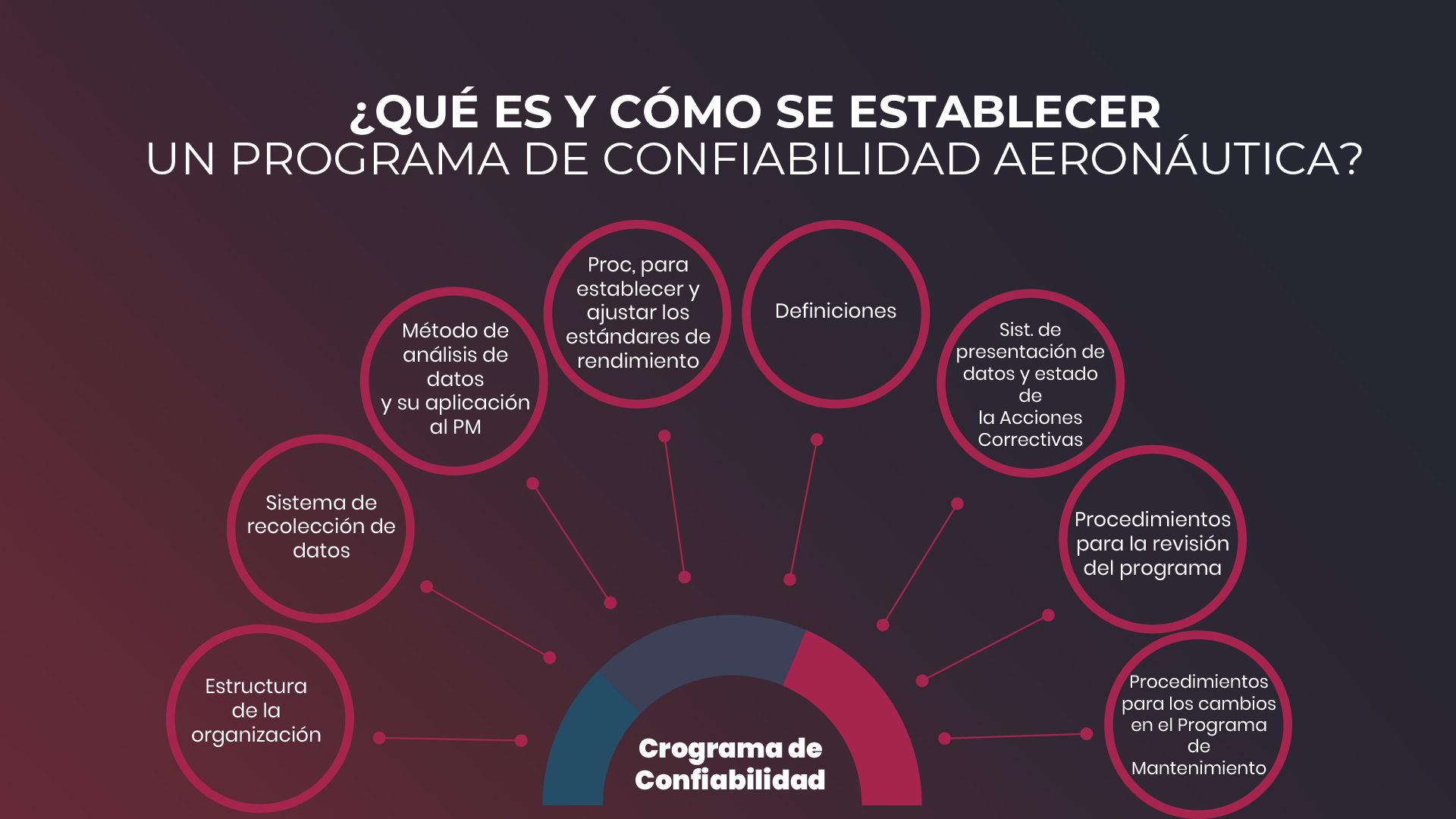
Establishing an aeronautical reliability program requires careful planning and a deep understanding of aeronautical systems. Here are some steps that could be useful when designing an aeronautical reliability program:
- Identify the program's objectives: Determine the specific objectives of the aeronautical reliability program. For example, the objective could be to improve safety, reduce maintenance costs, increase aircraft availability, among others.
- Establish a reliability team: Assemble a team of experts in aeronautical reliability to design and execute the program. The team should include personnel with experience in engineering, maintenance, inspection, and operations.
- Collect data: Identify and collect data from the aircraft and its environment, including operation, maintenance, and repair data. Data collection is essential to identify failure patterns and establish reliability baselines.
- Analyze the data: Analyze the collected data to identify failure patterns and trends. The data can be used to perform risk analyses, establish performance thresholds, and prioritize areas for improvement.
- Implement improvements: Based on the results of the data analysis, the reliability team should identify opportunities for improvement. These improvements can include changes in the aircraft's design, the implementation of preventive maintenance programs, training of the crew and maintenance personnel, among other measures.
- Monitor and evaluate the program: Once improvements have been implemented, it is important to continuously monitor and evaluate the aeronautical reliability program. This ensures that the improvements are working as expected and that the program's objectives are being achieved. programa.
Es It is important to keep in mind that the design of an aeronautical reliability program should be customized for the specific aircraft and company. Airline industry standards and regulations must also be followed. This is where our specialized reliability consultants can support your efforts to establish or optimize your reliability program. We offer training, consulting, and outsourcing of the different components of a reliability program. We invite you to write to us at [email protected] to initiate pragmatic actions that improve your business.